When Big Feelings Take Over
Every family knows those days when emotions feel “bigger than the room.” A tiny request turns into a meltdown, a simple transition becomes a full-body protest, and everyone ends up exhausted and confused. It can look like defiance or drama, but most of the time it’s a stressed nervous system doing its best to cope.
This post is all about what’s really going on in the brain when emotions run high, and how gentle, steady support can help kids (and parents) breathe again.
What’s Happening Inside an Overloaded Brain
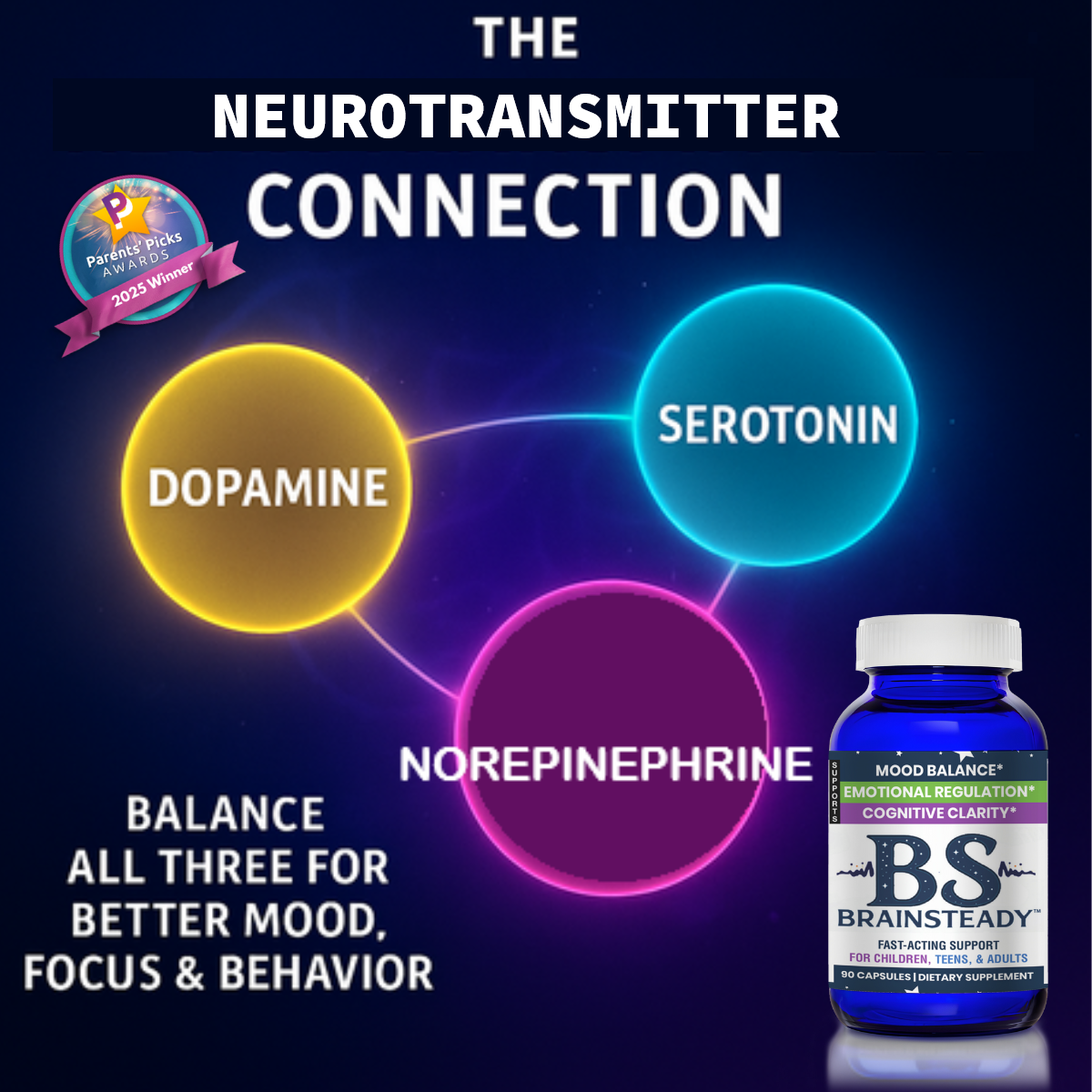
When the brain feels unsafe, it moves into survival mode. Logic and language go quiet, and “fight, flight, or freeze” takes over. Three key neurotransmitters have a big say in how intense those moments feel:
- Dopamine – motivation, interest, and the ability to start or finish tasks.
- Serotonin – mood balance, flexibility, and the ability to “roll with it.”
- Norepinephrine – alertness, focus, and how easily the body tips into anxiety.
When these brain chemicals are out of balance, kids may go from “okay” to overwhelmed in seconds. It’s not that they won’t cooperate; it’s that they can’t in that moment.
How It Shows Up in Everyday Life
You might notice patterns that don’t match the situation in front of you. Common signs include:
- Huge reactions to small requests or changes in plans.
- Arguing, “talking back,” or shutting down when they feel cornered.
- School refusal, difficulty at drop-off, or after-school meltdowns.
- Difficulty settling for sleep even when they’re clearly tired.
- Parents feeling like they’re “walking on eggshells” to avoid the next blow-up.
When we see these behaviors as a brain-chemistry issue instead of a character issue, everything softens. Kids feel less ashamed. Parents feel less blamed. And we can finally work with the brain instead of fighting against it.
Gentle Supports That Help Brains Settle
You don’t have to overhaul your whole life to support emotional regulation. Small, steady changes really do add up. Families in our community often start with:
- Predictable routines – simple “anchor points” like morning, after-school, and bedtime routines that help the brain feel safe.
- Regulation breaks – time to move, breathe, or gently reset before kids hit the red zone.
- Brain-supportive nutrition – protein, hydration, and nutrients that feed calm focus.
- Compassionate language – swapping “What’s wrong with you?” for “Your brain is having a hard time. Let’s figure out what it needs.”
Where BrainSteady™ Fits In
BrainSteady™ was created for kids, teens, and adults whose brains feel like they’re always on high alert. Our gentle BS (Better Support) formula is designed to nourish the same neurotransmitters that influence focus, mood, and emotional regulation – including dopamine, serotonin, and norepinephrine.
When those supplies are supported, families often describe:
- Fewer “out of nowhere” meltdowns.
- Smoother transitions between activities or environments.
- More ability to pause, think, and choose a different response.
- Evenings that feel calmer for everyone, not just the kids.
Steady Days, One Brain at a Time
If this sounded a little too familiar, you are not alone – and you’re not a “bad parent” for needing backup. Some brains simply need more support to do what they’re already working hard to do.
With small daily practices and the right BS (Better Support), it really is possible to see fewer blow-ups, softer landings after big feelings, and more room for connection in the middle.
When emotions run high, BrainSteady™ is here to quietly support the chemistry behind the scenes – so kids (and parents) can finally exhale.