What Do Serotonin and Dopamine Do? Everyday Life Guide
Scroll through any wellness feed and you’ll meet dopamine and serotonin as the “happy chemicals”: one for treats, one for good moods. It’s a tidy story, and it’s easy to see why it spreads. The fuller picture is more useful, and a little messier.
This guide explains what each chemical does in plain words, with examples from an adult’s workday and a child’s school day, and where food fits in.
Neurotransmitters Explained: What Serotonin and Dopamine Do
Labels like “feel-good chemical” stick because feelings are hard to describe and a one-word explanation is easy to remember. If you’ve ever wondered why your focus or mood changes from one day to the next, a simple label feels like an answer. It’s only half of one.
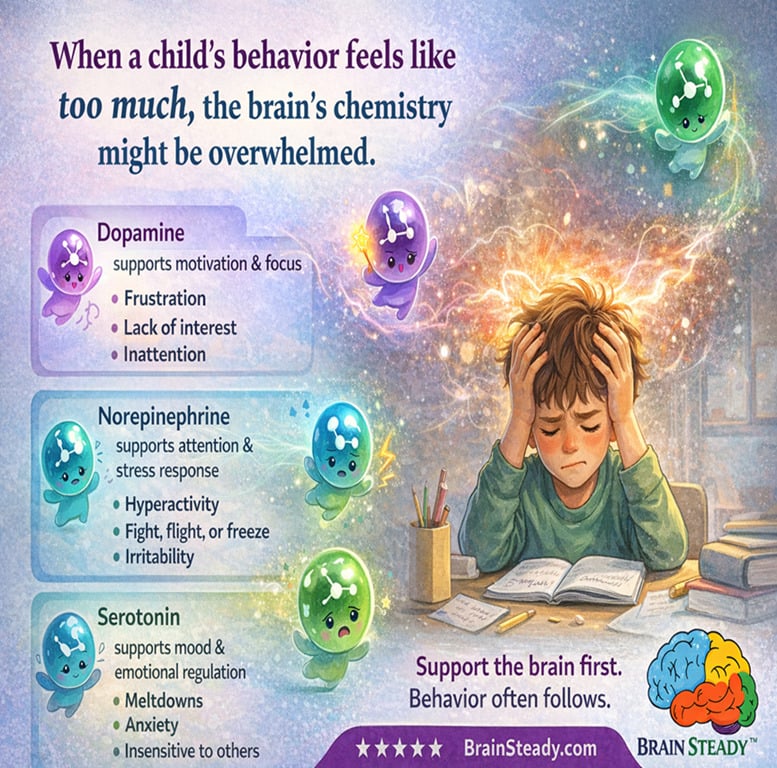
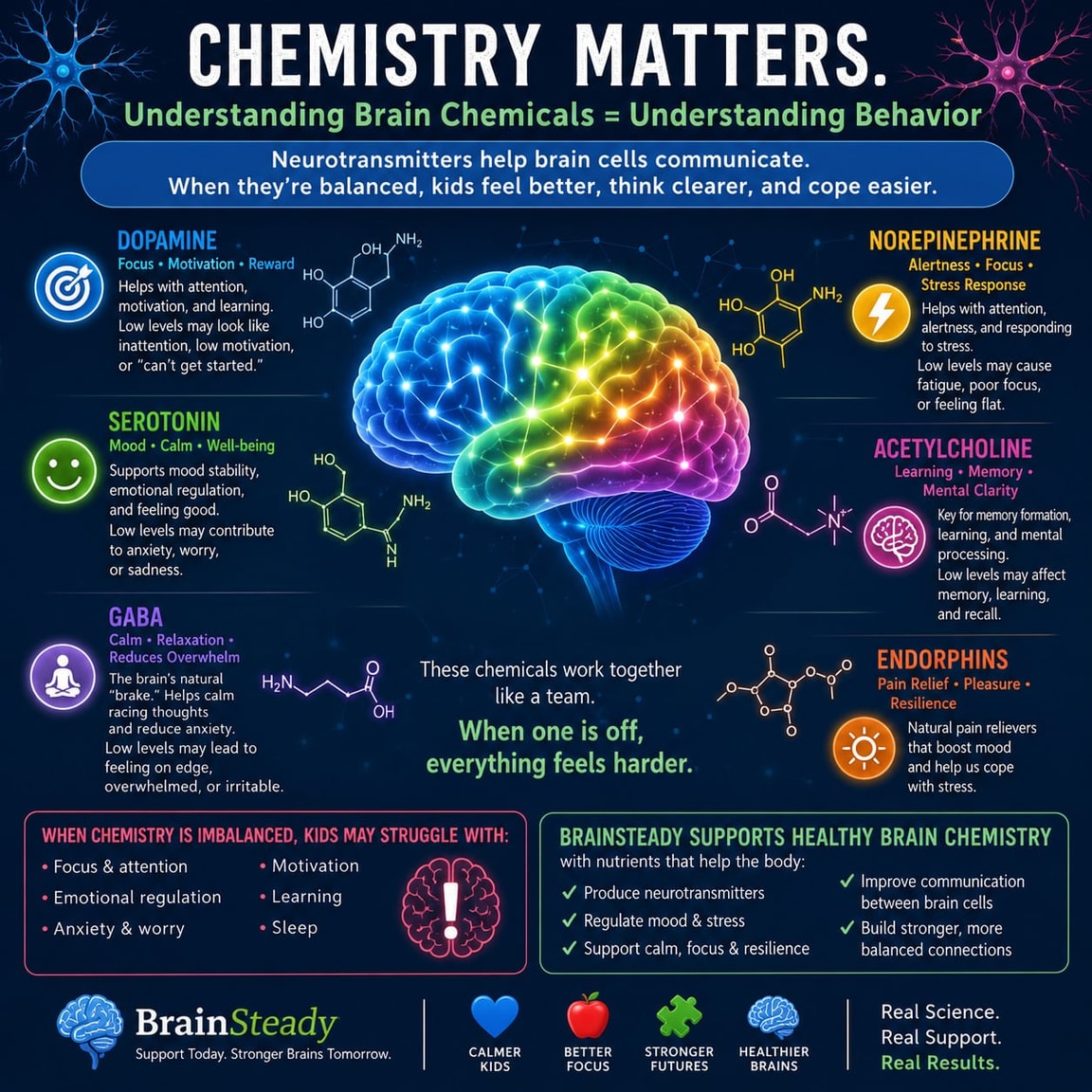
So here is the short version of what serotonin and dopamine do. Dopamine signals what is worth effort and helps you learn from how things turn out. Serotonin helps steady mood, and it shapes sleep, appetite, and how the brain handles stress.
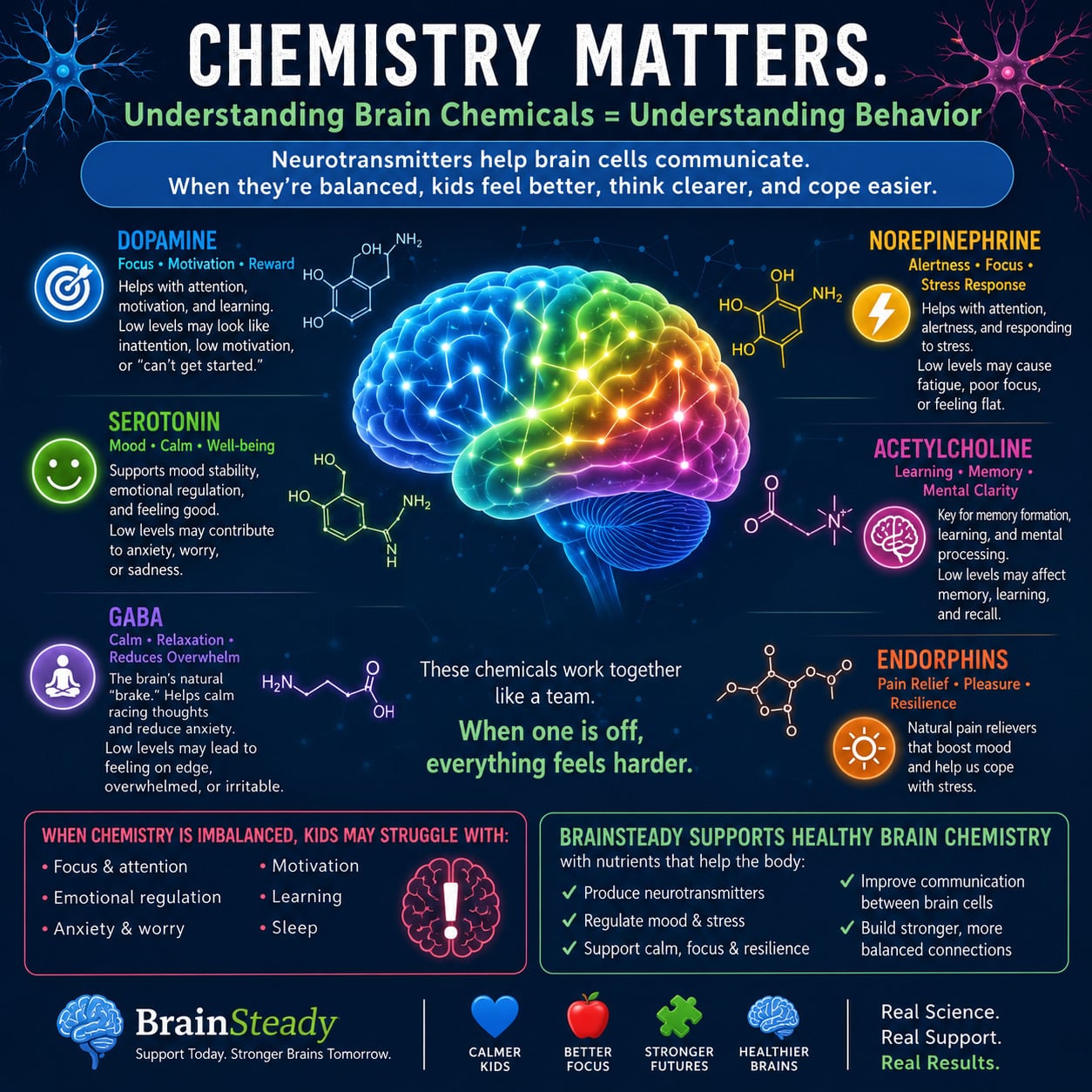
Both are neurotransmitters, which are chemical messengers that carry signals from one nerve cell to the next. The brain uses many of them, including glutamate, GABA, and acetylcholine, and each one does different jobs in different places. For a neutral definition, the U.S. National Library of Medicine keeps an expert-curated MeSH entry for serotonin, and the University of Bristol’s Molecule of the Month page describes the molecule itself.
Everyone makes both, whatever their age or sex.
A seven-year-old, a teenager, and a fifty-year-old all run on dopamine and serotonin, although the way those systems show up in daily life shifts with age, sleep, stress, and circumstance.
What Dopamine Does in Everyday Life
Dopamine is less about enjoying something than about deciding it is worth going after. Think of it as a “this matters, pay attention” signal rather than a pleasure chemical.
Dopamine and Focus in Daily Tasks
Picture an adult facing a long report with a blank first page. Starting is the hardest part, because the payoff feels far away. Dopamine helps a goal feel worth starting, and it helps hold your attention on that goal once you’ve begun.
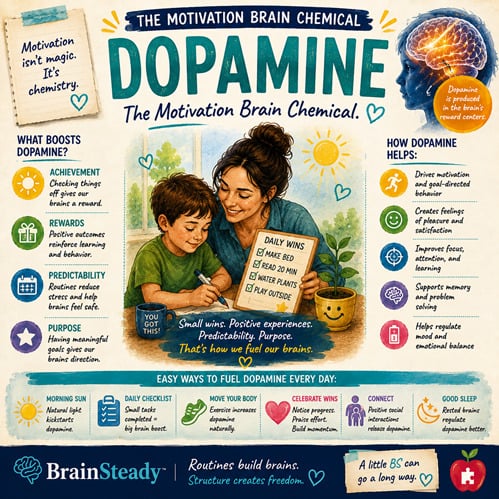
A child practicing times tables is in the same spot. If the task feels pointless or the reward feels too distant, getting going can feel like pushing a boulder uphill. That isn’t laziness or a character flaw. It’s what effort feels like when the brain isn’t yet convinced the effort will pay off.
No food, habit, or supplement can switch dopamine on at will, and anyone who promises that is overselling. What you can do is change the task: make the first step smaller, or make progress easier to see.
Motivation, Anticipation, and Learning
Dopamine also tracks surprise. When an outcome turns out better than you expected, dopamine activity shifts and the brain takes note: that approach worked, do more of it. When an outcome falls short, the expectation adjusts downward.
A child who practiced spelling all week and then gets a good test result is getting exactly that kind of update. So is an adult whose dreaded meeting goes fine. Over time, these small corrections shape what feels worth trying again.
This is also why small, visible wins tend to help. A crossed-off list or one finished chapter gives your brain clearer feedback than a vague sense of “I should be further along.”
What Serotonin Does in Everyday Life
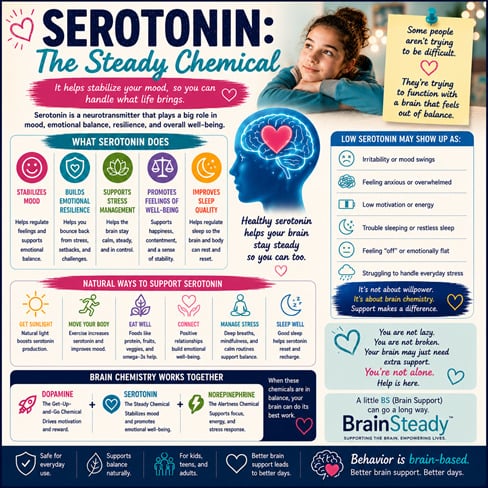
Serotonin works more like a regulator than a switch. It helps keep mood, sleep, appetite, and stress responses within a workable range, which is quieter and harder to notice than a burst of excitement.
Serotonin and Mood Steadiness
Think of a rough week: poor sleep, a tight deadline, a tense conversation. By Thursday, small problems feel heavy, and a dropped coffee feels like the last straw. Serotonin is one of several systems that help the brain keep that kind of load from tipping your whole mood.
It is not a happiness switch, though. Serotonin acts through many different receptors in different brain areas, and its effect depends on which area and which receptor are involved. The same chemical can do quite different things in different places.
Sleep, Appetite, and Responding to Stress
Now picture a young child whose routine just changed: a new school term, a new bedroom, a parent working different hours. Bedtime suddenly takes two hours. Serotonin is part of the wider system that shapes sleep rhythms, appetite, and how the brain responds to stress and emotional information, so changes in routine can ripple through all three at once.
You can’t tell from a bad night or a skipped dinner which chemical is responsible, and nobody can from the outside. That limit is worth keeping in mind whenever a headline names a single cause for a single feeling.
Debunking the “Happy Chemicals” Myth
Let’s name the myth directly. Dopamine is not only pleasure, and serotonin is not only happiness. Each does several jobs, and calling them “happy chemicals” hides most of them.
The phrase “chemical imbalance” has the same problem. It’s everyday shorthand, not a measurable target you could check with a home test, and it doesn’t tie either chemical to one condition. That is why this article doesn’t link dopamine to ADHD or serotonin to anxiety. Real experiences like those have many contributing factors, and a single-chemical explanation misses most of them.
Serotonin vs. Dopamine: Why They Aren’t Rivals
It’s tempting to picture a see-saw, with dopamine up when serotonin is down. The brain doesn’t work that way. The two systems interact across many circuits, and what one does depends on where and when the other is active.
An INSERM research paper on serotonin makes the point in its title: serotonin differentially modulates excitatory signaling, meaning its effects vary from circuit to circuit instead of working as one uniform mood dial. If you take one idea from the serotonin vs. dopamine debate, make it this: they are teammates in a large network, not opposing sides.
Brain Chemistry and Behavior: Everyday Examples for Adults and Kids
The same chemistry can look quite different depending on who you are and what your day holds. Behavior is brain-based, but that doesn’t mean every hard moment is a chemical problem. Sleep, stress, routine, and environment shape behavior too.
Adult Days: Work, Routines, and Stress
A deadline can keep you on task partly because the goal feels close enough to be worth the effort, which is a dopamine-style signal at work. A new habit, such as a morning walk, takes effort in the first few weeks and gets easier as repetition and small rewards teach your brain it’s worth doing.
Then there’s the stressful commute. Your stress responses, which serotonin helps shape alongside other systems, are working before you’ve opened your laptop. Add a poor night’s sleep, too much caffeine, or a noisy office, and the whole day runs differently.
If this sounds familiar, you’re not failing. Our piece on adult irritability and overwhelm goes further into why hard days stack up.
Child and Teen Days: Learning, Play, and Bedtime
Homework asks a young brain to keep going when the reward is distant, which is a lot to ask at 4 p.m. after a full school day. A video game, by contrast, hands out quick, frequent feedback, which partly explains why it’s so hard to put down. The brain is responding to expectation and reward, not to a lack of willpower.
Then comes the wind-down. Sleep depends on routine, light, and a settled mind, and serotonin is one piece of that puzzle. A teen scrolling in a bright room and a child anxious about tomorrow’s test may both struggle to settle, for different reasons.
Hunger, tiredness, and a rough day at school matter as much as any neurotransmitter. If you’re a parent or caregiver, our guide to emotional regulation support for children offers more on reading what’s behind a hard evening.
Nutrition’s Supporting Role in Brain Chemistry
Food can’t flip a switch in your brain, but it does supply raw materials. Your brain builds serotonin from the amino acid tryptophan and dopamine from tyrosine, and both amino acids come from dietary protein. Eating enough protein, regularly, is part of keeping those supplies available.
What Food Can and Can’t Do for Serotonin and Dopamine
A common assumption is that eating serotonin-containing foods raises serotonin in the brain. It doesn’t work that way. Most of the body’s serotonin is made in the gut, and serotonin from food does not directly raise brain serotonin.
Research into the gut side is still young. In a mouse study reported by Caltech, gut cells from germ-free mice produced about 60 percent less serotonin than those from mice with conventional gut bacteria. That finding concerns serotonin made in the gut, not the mood chemistry of the brain, so treat it as early animal evidence rather than proof that diet or any product changes mood.
The same caution applies to supplements. Research on an individual ingredient doesn’t automatically show how a finished product performs. Our brain formula was developed with focus, mood balance, and emotional regulation in mind, and we keep ingredient research separate from evidence about the finished product. If you’d like to see the reasoning, read what the evidence says about dopamine and serotonin support supplements or browse the ingredient details for our brain formula.
Neither food nor a supplement replaces sleep, routine, or professional care, and this article isn’t medical advice.
Practical Next Steps for Everyday Brain Wellness
Brain chemistry makes good headlines, so it helps to have a quick filter. Before you trust a claim about dopamine or serotonin, check three things:
- Whether the evidence comes from people or from animals
- Whether a named source sits behind it, such as a university, a journal, or a health agency
- Whether it promises that one chemical explains one feeling, which is almost always too simple
A claim that fails those checks isn’t necessarily false, but it deserves caution. (That’s the “BS” test, if you like: Brain Support, not the other kind.)
Our approach starts from the idea that we do better when we feel better, so the manageable steps come first:
- Steady sleep and wake times, even on weekends where you can
- Daily movement, even a short walk
- Predictable routines, especially around mornings and bedtime, for adults and kids alike
None of these is a cure-all, and a hard week doesn’t mean you’ve done them wrong. Pick one, and let it settle before adding another.
If you or your child takes a medicine that acts on serotonin or dopamine, talk to a clinician before adding a supplement or changing anything. These systems are connected, so a change in one place can have knock-on effects elsewhere. This overview of supplements that can interact with SSRI medication explains what to watch for, and a practical guide to talking with your doctor about brain supplements helps you prepare for that conversation.
Frequently asked questions
What are the main neurotransmitters and what do they do?
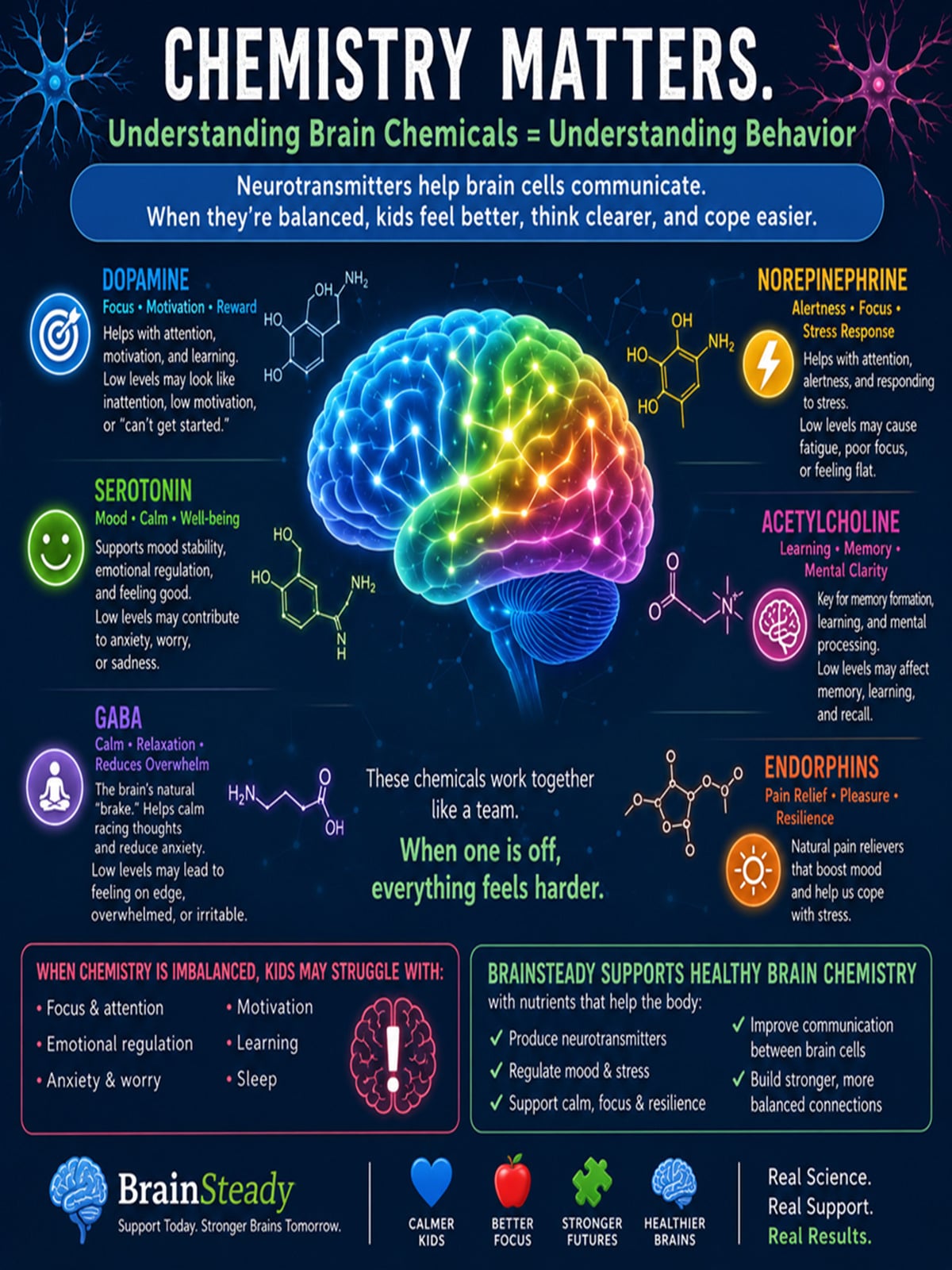
There’s no official list of seven, and the brain uses many more. Commonly discussed ones include glutamate (the main excitatory signal), GABA (the main calming signal), acetylcholine (attention, memory, and muscles), norepinephrine (alertness), dopamine (motivation and learning), serotonin (mood steadiness, sleep, appetite, stress responses), and endorphins (often linked to pain relief). Each does different jobs in different circuits.
What foods are high in serotonin?
Some foods contain small amounts of serotonin, but eating it doesn’t directly raise serotonin in the brain. Protein-rich foods such as eggs, fish, poultry, dairy, tofu, nuts, and seeds supply tryptophan, which the body uses as a building block. Building blocks help, but they don’t switch serotonin on.
Does sertraline affect dopamine reuptake?
Sertraline is classed as an SSRI, a medicine that mainly acts on serotonin. Some research has also looked at whether it touches dopamine systems, but that’s a question for your prescriber or pharmacist. Don’t change a dose or add a supplement without checking with them first.
Do females release dopamine?
Yes. People of every age and sex make and use both dopamine and serotonin. Hormones, sleep, and life stage can influence how these systems behave, but everyone has them.
Can I tell whether my dopamine or serotonin is “low”?
Not from symptoms or a home test. “Low dopamine” and “chemical imbalance” are everyday shorthand, not measurable targets, and many factors, including sleep, stress, and routine, shape how you feel. If something is affecting your daily life, a clinician can look at the whole picture.