
Supplement for Child Emotional Regulation: Can It Support?
Some days a dropped cracker turns into a twenty-minute storm. You know your child is not doing it on purpose, and you are still tired, stretched and wondering what you missed. That experience is common, and it is not a verdict on your parenting.
So can a supplement for child emotional regulation help? The honest answer is a qualified one: a supplement may support, but it does not fix. Nothing in a capsule or a bottle replaces sleep, regular meals, a calm adult nearby, or professional care when it is needed.
This article walks through what research says, what it doesn’t, and which routines and words tend to help more than any product.
Behavior Is Brain-Based: What Big Feelings Look Like
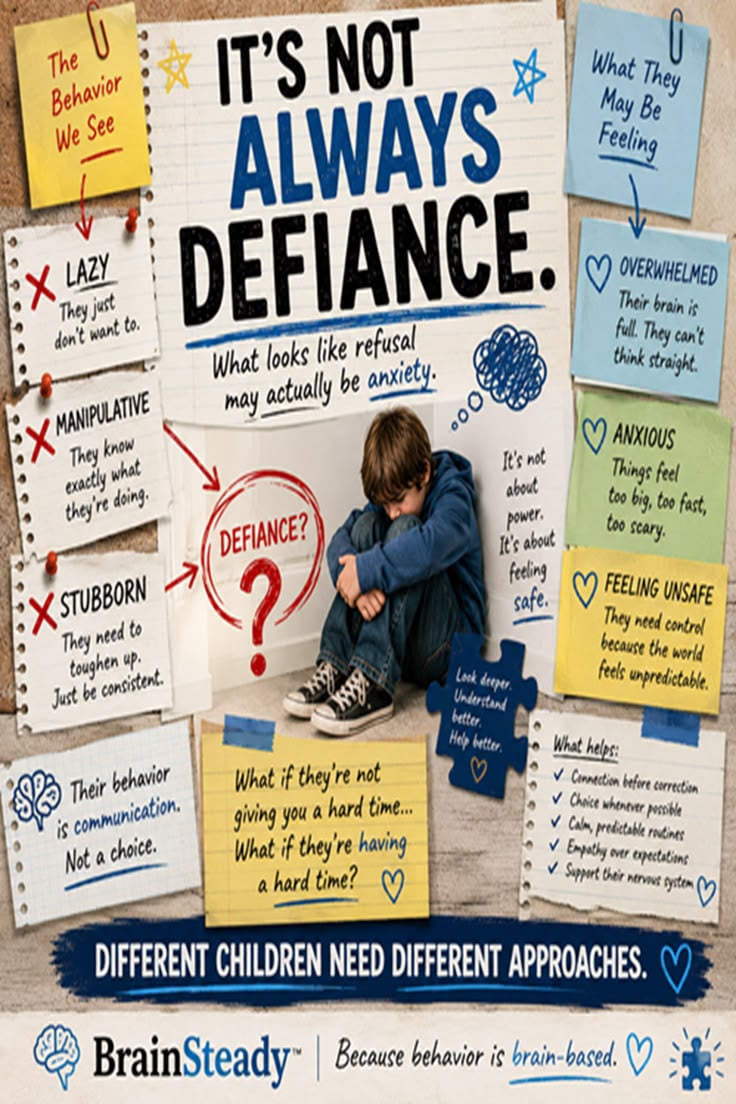
“Behavior is brain-based” means something simple. A child’s actions come from a nervous system that is still being built, and that system works differently when it is tired, hungry, overwhelmed or stressed.
It does not mean every hard moment is a medical problem. It means a child with less capacity left usually has less self-control left too.
In everyday terms, emotional dysregulation can look like:
- Screaming or crying that seems far bigger than the trigger
- Freezing, going silent or refusing to move
- Hitting, throwing or slamming doors, then looking shocked afterward
- Taking a long time to settle once upset
- Falling apart at the same predictable times, such as after school or at bedtime
Most of these show up in typical children at some point. Blame doesn’t help, because a child in the middle of one cannot reason their way out. They need help getting their body calm first.
Emotional Regulation for Kids Develops Over Time
Child development experts generally describe emotional regulation as a skill that matures gradually through childhood and adolescence, so intense feelings are expected at many ages. A toddler has almost no brakes. A nine-year-old has some, but they wear thin by the end of a school day.
Teens have their own version, with new pressures and big swings. If your child is heading that way, a guide to teen focus and mood support covers what changes. You can also read a general overview of the idea on Wikipedia’s page on emotional self-regulation.
Skills grow with practice and support, not with pressure.
What Research Says About Supplements and Emotional Regulation in Children
If you are weighing a kids mood balance supplement, it helps to know how much solid ground there is. Not much, and it is worth being clear about that. The research on nutrients and children’s mood is mixed and thin, with small studies, short timeframes and results that don’t always agree.
Ingredients Studied for Children’s Mood and Behavior
Several nutrients come up again and again when researchers look at children’s mood and behavior:
- Omega-3 fatty acids. Studied for attention, mood and irritability. Results vary from study to study, and many involve children with a diagnosed condition such as ADHD.
- Vitamin D. Low levels have been linked to mood difficulties in observational work, but that pattern alone doesn’t show that adding more helps a child who isn’t deficient.
- Magnesium. Studied in small trials, often combined with other nutrients, which makes it hard to say what did the work.
- B vitamins. Involved in how the brain makes and uses chemical messengers. Trials in children are limited and results are inconsistent.
- N-acetylcysteine (NAC). Examined in small studies, mostly in children with specific diagnoses.
- Inositol. Early, limited research, with more questions than answers.
- Chamomile. A traditional calming herb. Most of the research is in adults, and child data is sparse.
Three patterns run through nearly all of it. The studies tend to be small or short. Many enroll children who already have a diagnosis, not children who simply have big feelings. And the findings rarely line up neatly.
That doesn’t mean these nutrients do nothing. It means the research cannot yet promise that any one of them will change how your child handles a hard afternoon.
Ingredient Research Is Not the Same as Product Evidence
A study of one ingredient at one dose in one group of children says little about a finished product that uses a different dose, a different form or a blend of several ingredients, and that is why ingredient research can’t prove a product works for your child. Dose matters. Form matters. So does the combination.
Our brain formula was developed with focus, mood balance and emotional regulation in mind. That describes our intent when we built it. It is not proof that it changes behavior in any child, and we don’t have a product-level study to cite here.
When you read any label, look for:
- The amount of each ingredient per serving, not just a list of names
- Whether a “proprietary blend” hides the individual amounts
- The age range the product is meant for
- Allergens, added sugar and other ingredients
- Whether the claims stay modest, or promise to fix behavior
For a closer look at one corner of this field, read what the evidence says about neurotransmitter-support ingredients.
Where a Mood-Balance Supplement Fits for Kids
Think of a supplement as one small piece of a wider plan, never the plan itself. That plan includes sleep, regular meals, movement, adults who help a child settle, and professional support when home strategies aren’t enough.
To be plain about it: a supplement is not a treatment for emotional or behavioral difficulties, and it is not the right starting point if your child is struggling a great deal. It doesn’t suit families looking for a quick fix to meltdowns, because nothing offers that.
If you decide to explore one anyway, our brain formula is one option you can learn more about. It comes in capsule and liquid forms for children, teens and adults. Younger children often do better with liquids, and how to choose and use a liquid supplement for kids walks through the practical side.
Whatever you look at, use a checklist for choosing a brain supplement so you judge every label by the same neutral questions. Then run it past your child’s doctor before you start, as covered further down.
Everyday Routines That Support a Child’s Big Emotions
Routines work because they take decisions and surprises off a tired brain. When a child knows what comes next, their body spends less energy bracing for it, and more is left for coping.
You don’t need a color-coded chart. A handful of steady habits does most of the work:
- Predictable transitions. Give a heads-up before a change, such as “Five more minutes, then shoes.”
- A steady wind-down before bed. Same order, same dim lights, screens off earlier.
- Regular meals and movement breaks. Hunger and stiffness both lower a child’s patience quickly.
- A quiet place to retreat to. A corner with a blanket and a book, offered as a comfort and never as a punishment.
- An adult who stays calm. Your steadiness is the anchor, because children borrow calm from the people near them.
Calming Routines for Kids Before Stressful Moments
Calming routines for kids work best when they happen before the hard moment, not in the middle of it. Think about the transitions that reliably go badly: leaving the house, starting homework, getting out of the bath.
Put a small ritual in front of each one. That might be a snack and a few slow breaths before the school run, or ten minutes of running outside before homework. Because a child can’t practice calm while furious, you teach it when things are quiet.
Spotting the Patterns Behind Hard Days
Hard days are rarely random. If you keep a loose note for a week or two, you will probably see a pattern: hunger, too much noise or screen time, rushed transitions, or a child who simply didn’t sleep enough.
Take a child who melts down most afternoons. They may be hungry, overstimulated or rushing between transitions. A snack, a quiet landing spot and a predictable first stretch at home can change the pattern.
Change one routine at a time. If you alter the snack, the schedule and the bedtime in the same week, you won’t know which one helped, and a child who is already stretched may find the upheaval too much.
How to Help a Child With Meltdowns
A meltdown is not a negotiation. It is a moment when a child’s brain has run out of room, so the goal is to lower the load, stay close and repair afterward.
That works the same whether the child is four or fourteen. The words change, and the principle doesn’t.
Communication Scripts for Hard Moments
These are starting points, not magic phrases. Adapt them to your child’s language and temperament, and shorten them if your child is young or very upset.
Before the wave (you see it building):
- “Your body feels overloaded right now. That’s okay.”
- “Do you want a snack first, or a quiet minute first?”
A simple choice gives a child a little control without a long conversation.
During it:
- Say less. One short sentence is plenty: “I’m here. I’ve got you.”
- Keep your voice low and slow.
- Stay close, or sit nearby if touch makes it worse. Skip the lectures, the questions and the consequences for now.
After it (once everyone is calm):
- “That was really hard. Thank you for calming down.”
- “Next time, what could help? A hug, space, or a break?”
- If you lost your own cool, repair that too: “I got loud, and I’m sorry. Let’s try again.”
A short repair and a small plan teach more than any speech delivered mid-storm.
Perfect wording matters far less than your steadiness. A child who feels you are calm and not leaving will usually forgive a clumsy sentence.
When to Bring in a Pediatrician or Mental Health Professional
Home strategies and routines carry many families a long way. Some situations need more, and asking for help early is a sign you are paying attention, not that you have failed.

Signs a Child Needs More Than Home Strategies
Consider an evaluation if you notice any of these:
- Big feelings or behaviors that continue across home, school and other settings
- Lingering changes in sleep, appetite or schoolwork
- Meltdowns that are getting more intense or more frequent over weeks, even with steady routines
- Distress that keeps your child from friends, activities or daily life
Any talk of self-harm, or any concern about your child’s safety, needs urgent help right away. Contact emergency services or a crisis line in your area, and don’t wait to see how things go.
Start with your child’s pediatrician, and ask about school support too. Parent-training programs and child therapies are well studied for these difficulties, and they have a much stronger evidence base than any supplement.
Talking With a Clinician Before Giving Any Supplement
Mainstream pediatric practice treats any supplement as something to review with a child’s doctor first, especially when a child takes prescription medicine or has a diagnosed condition. Please make that conversation your first step, before a product goes into your cart.
Bring the label with you, along with a list of everything your child already takes. A pediatrician or prescriber can tell you whether an ingredient or dose fits your child, and whether anything could interact with a medicine.
Caring for Yourself While You Support a Child
You have big feelings too. Parents and caregivers carry a lot, and a steady adult is one of a child’s strongest supports, which is why looking after yourself is part of the plan and not a bonus.

We keep coming back to a simple line: “We do better when we feel better.” It holds for children, and it holds for the adults standing beside them.
Say you feel your voice rising at dinnertime. You can pause, name the feeling to yourself, take a slow breath and return to your child with a short, calm sentence. You won’t get it right every time, and that is fine.
Small things count: a few minutes outside, a proper meal, an early night, or a friend you can call after a rough evening. If your own focus or calm feels worn thin, our adult focus and calm guide is written for you.
A small aside, since we like to keep things light: BS here means Brain Support, not the other kind.
If you’d like to talk through our brain formula, or have questions about capsule and liquid options, you can talk with our team to learn more.
Frequently asked questions
What does it mean to have no emotional regulation?
It usually means someone has trouble managing the size and length of their feelings, so reactions look much bigger than the trigger or take a long time to settle. Almost no one has none at all. Children are still building the skill, and adults lose it when they are tired, hungry or stressed. If it disrupts daily life for weeks, a pediatrician or mental health professional can help work out why.
How do I help a dysregulated child?
Lower the load first: speak softly, use very few words and stay close. Talk about what happened only after your child is calm, and then plan one small change together. Steady routines such as regular meals, sleep and predictable transitions make hard moments less frequent over time.
How can I explain feeling overwhelmed to a child?
Use body words they can picture, such as “Your body feels overloaded, like a glass that’s too full.” Pair it with a small choice, such as a quiet corner or a hug. Naming the feeling on calm days, in books or about yourself, makes it easier for them to find the words in the moment.
Why is my four-year-old so emotional?
Four-year-olds have strong feelings and very few tools to manage them yet, so tears and tantrums are expected at this age. Hunger, tiredness and sudden changes make it worse. Predictable routines, simple feeling words and a calm adult help most. If the intensity is extreme, lasts for weeks or affects several settings, mention it to your pediatrician.
Should I talk to a doctor before giving my child a supplement?
Yes. Mainstream pediatric practice treats any supplement as something to review with a child’s doctor first, particularly if your child takes medicine or has a diagnosed condition. Bring the product label so the doctor can check the ingredients and amounts.





One Comment