Natural Alternatives to ADHD Supplements for Focus Support
Trouble focusing is real, and it is rarely a character flaw. Maybe you lose the thread halfway through an email, reread the same page three times, or feel your attention scatter by mid-afternoon. Some people reading this have an ADHD diagnosis. Others have never been assessed and simply find focus harder than they’d like.
Either way, you deserve straight information rather than hype. This guide looks at natural focus support: what it can and can’t do, what the research says about common ingredients, and which questions to bring to a clinician. If mood or stress swings come along with the distraction, an honest look at emotional regulation supplements for adults covers that side. And if you’re reading for a child, a parent guide to teen focus and mood supplements is a better starting point.
Adult Focus Struggles and Distractibility: Common Causes Worth Checking
Attention depends on far more than willpower, so a supplement is rarely the first thing to look at. A clinician can help you check several common contributors before you spend money on anything:
- Sleep. Short or broken sleep dulls attention quickly, and untreated sleep problems can look a lot like a focus problem.
- Stress. A mind busy with worry has less room for the task in front of it.
- Low mood or anxiety. Both can make concentrating feel like wading through mud.
- Medication side effects. Some prescription and over-the-counter medicines cause drowsiness or mental fog.
- Thyroid function. An underactive or overactive thyroid can affect energy, mood, and concentration.
- Iron levels. Low iron can leave you tired and foggy, and only a blood test shows whether that applies to you.
If a few of those sound familiar, that is a useful thing to say out loud at your next appointment. Supplements become one question among several, not the whole conversation.
Natural Options for Focus: What Supplements Can and Can’t Do
People search for natural alternatives to ADHD supplements and medicines because they want something gentle. That’s a reasonable wish. It helps to know where the realistic edges are before you start.
What a Supplement Can Realistically Offer
Supplements are neither miracle fixes nor empty bottles. For natural supplements for concentration, the honest description is a modest, variable support that may matter most when a nutrient gap has actually been confirmed, and that may do little for you if your intake is already adequate.
Judging any effect takes consistent use over weeks, not days. One good afternoon after a new capsule tells you very little, because sleep, stress, and expectation all move your focus too.
Be wary of claims that a product “balances dopamine” or rewires your attention. The research on individual ingredients doesn’t reach that far.
What Supplements Can’t Replace: Diagnosis, ADHD Care, and Medication
No supplement diagnoses ADHD, treats it, or replaces a clinical evaluation. Mainstream ADHD guidance, as followed in general clinical practice, centers on evaluation and established treatments. It does not present supplements as a stand-alone replacement for them.
That includes the “natural Adderall” headlines. Prescribed stimulant medicines have been studied as medicines and are dosed and monitored by a clinician. A over-the-counter capsule isn’t the same kind of thing, and it won’t deliver stimulant-like focus.
If you take prescribed medication, please don’t stop or change it because of something you read here or anywhere else. Any change goes through the person who prescribed it.
Ingredient Evidence: What the Research Does and Doesn’t Show
No single natural supplement is the “best” choice for focus. The research on the most-discussed ingredients is mixed, mostly comes from small studies, and often looks at specific groups rather than the general adult reader. Each entry below says what the ingredient is, what the research suggests, and what to ask.
Ingredients That Get the Most Research Attention
Omega-3 fatty acids. These are the fats in fish oil, mainly EPA and DHA. They are among the most studied options for attention, with mixed results and effects that are small at best. Ask whether your diet already covers them, and whether they affect any medicine you take. The NIH Office of Dietary Supplements summarizes the wider evidence.
Zinc. This mineral supports many body processes. Trials on attention are small and mixed. Ask whether testing or your diet suggests you’re low, because taking high amounts over time can cause problems of its own.
Magnesium. It is often marketed for calm and sleep, yet attention-specific research is thin. Ask whether it suits you given your health history and medicines.
Iron. Iron matters for energy and thinking, but it’s relevant only when testing shows low levels. Extra iron you don’t need can be harmful, so ask for a blood test before supplementing. The NIH iron fact sheet explains why.
Calm-Focus Blends and Herbal Ingredients to Read Carefully
L-theanine. This amino acid occurs naturally in tea. It is often studied alongside caffeine, and the evidence for it on its own is thinner. Ask whether it makes sense for you if you’re avoiding caffeine.
Bacopa. A traditional herb, studied mostly for memory. Evidence for attention in people with ADHD is thin and inconsistent. Ask about interactions before trying it.
Rhodiola. Often sold as an “adaptogen” for stress and fatigue. Research on attention is limited and uneven. Ask how it might sit alongside your other medicines.
Ginkgo. A leaf extract with mixed results for focus. It can affect bleeding, so ask first if you take blood thinners.
St. John’s wort. Used for low mood, with thin and inconsistent evidence for ADHD. It interacts with many prescription medicines, more than any other ingredient here, and can make some of them work less well. The National Center for Complementary and Integrative Health lists the main concerns. Don’t combine it with anything prescribed unless your prescriber or pharmacist says it’s safe.
Caffeine-Free Focus Support: How to Read a Label
Plenty of people want a focus supplement without caffeine. Caffeine can disrupt sleep, bring on jitteriness, raise heart rate, and worsen anxiety, and any of those can make concentration worse instead of better.
Three label words get mixed up. “Caffeine-free” is about one compound. “Non-stimulant” and “natural” are separate claims, and none of the three shows that a product works or suits you. Some prescription ADHD medicines are non-stimulants too, so the word alone doesn’t tell you whether a product is a gentle option or a good fit for your situation.
Where Caffeine Hides in Focus Blends
Caffeine often sits under botanical names rather than the word itself, so the front label isn’t enough. Turn the bottle around and read the full ingredient list, including the “other ingredients” and any proprietary blend. Look for:
- green tea extract
- guarana
- yerba mate
- kola nut or coffee fruit
L-theanine on its own contains no caffeine, but a blend that pairs it with green tea extract might. If a label doesn’t say how much caffeine is in the product, ask the maker.
Once the label checks out, format is the next practical choice, and capsule or liquid: how to choose a format walks through the trade-offs.
Lifestyle Foundations That Pair With Natural Focus Support
Everyday habits are worth trying alongside any supplement, and they don’t replace care. They also cost little and carry few downsides, which makes them a sensible place to begin.
“We do better when we feel better” is an encouragement here, not a promise. Small improvements in how you feel can make a hard day a bit easier.
Sleep, Movement, and Daily Routine
- Sleep: Keep a steady bedtime and wake time where you can, and bring ongoing sleep trouble to a clinician.
- Movement: A walk or any regular activity you enjoy is enough to start with.
- Time outdoors: Daylight and a change of scene can break up a long stretch of screen work.
- Predictable routines: Fixed times for meals, work blocks, and breaks take some decisions off your plate.
Pick one habit, not all four. If you try several at once, you won’t know which one helped.
Questions to Bring to Your Clinician Before Trying a Supplement
A short list makes a short appointment more useful. How clinicians look at focus and mood supplements shows how these same questions are framed from the other side of the desk.
About Your Health, Medications, and Testing
- Should a medical or sleep issue be checked before I try a supplement?
- Could any ingredient interact with my current medicines, including over-the-counter ones?
- Does bloodwork, such as iron or vitamin D, make sense before I add anything?

About the Product, Your Plan, and Follow-Up
- Which ingredients and amounts does this product list?
- What research exists for each ingredient, and how strong is it?
- How will we judge progress, and when should we revisit the plan?
If you take a prescription, one reminder bears repeating: never stop or change it without the prescriber.
Where a Brain Formula Fits, and Next Steps
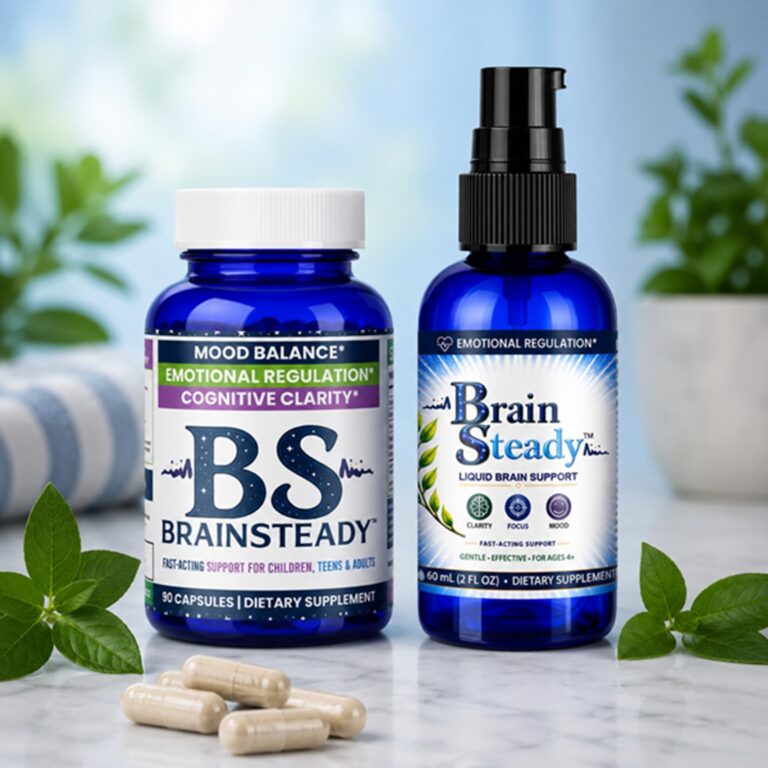
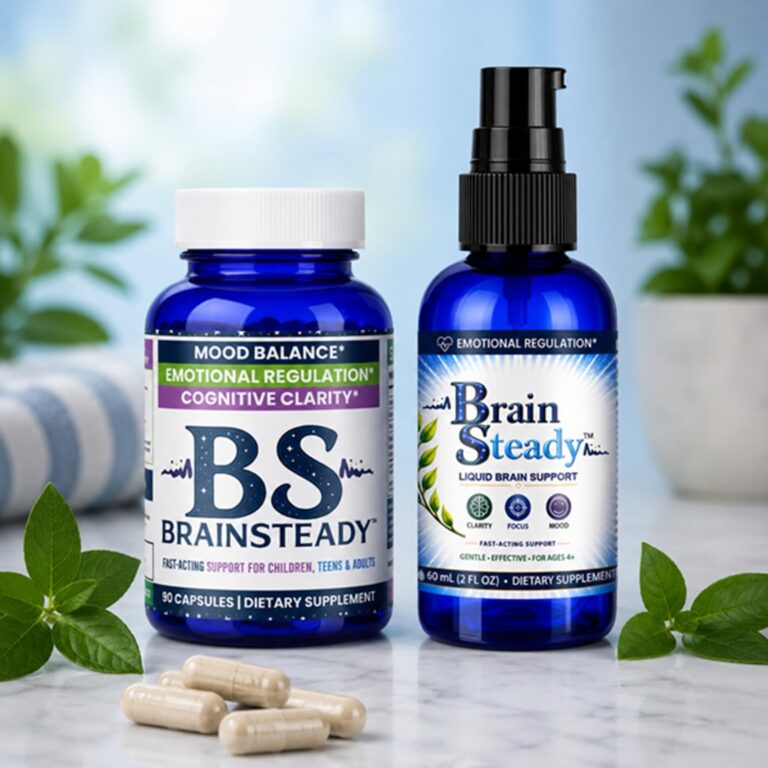
Our brain formula was developed with focus, mood balance, and emotional regulation in mind. That describes why it was built, not a promise of results. It doesn’t diagnose, treat, cure, or prevent anything, and it isn’t a replacement for clinical care.
Brain Support for Attention: Ingredient Research vs. Finished-Product Evidence
Research on an ingredient is not evidence about a finished product. A study of omega-3 or L-theanine tells you about that compound at that dose in that group of people. It can’t show that a particular blend works for you, because the amounts, combinations, and form all change the picture.
So treat any brain support product, ours included, as something to review with a professional, not a shortcut. (BS, by the way, means Brain Support, not the other kind.)
Start by taking the question list above to your next appointment. Afterward, you can look through our ingredient details with your clinician or pharmacist, or contact our team with product questions. There’s no rush.
Frequently asked questions
What is the best natural supplement for ADHD?
No supplement is established as the best, and none treats ADHD. Research on omega-3s, zinc, magnesium, and herbal ingredients is mixed and mostly from small studies. A clinician can tell you whether any of them fits your situation.
What helps ADHD focus naturally?
Steady sleep, regular movement, time outdoors, and predictable routines are reasonable habits to try. They support how you feel day to day, but they don’t replace an evaluation or prescribed treatment. If focus stays hard, ask a clinician to check sleep, stress, mood, thyroid, and iron.
Is there a natural alternative to ADHD medication?
No supplement has been shown to replace ADHD medication or a clinical evaluation. If you take a prescription, don’t stop or change it without your prescriber. You can still ask whether a supplement or lifestyle change might sit alongside your current plan.
What do Japanese people use to treat ADHD?
No supplement or traditional remedy is a recognized replacement for clinical care in Japan or anywhere else. Herbal traditions such as Kampo exist, but the evidence for using them for ADHD is limited. If you’re curious about one, ask a clinician about its safety and possible interactions.
Does ‘caffeine-free’ mean a focus supplement is gentler or safer?
Not by itself. ‘Caffeine-free’ says only that the product has no caffeine, and it says nothing about whether the other ingredients work or suit you. Read the full ingredient list for sources like green tea extract, guarana, and yerba mate, and check interactions with a clinician or pharmacist.