When Emotions Run High: Why BrainSteady™ Helps Brains Settle
Meltdowns, shutdowns, and intense reactions can leave the whole family feeling overwhelmed. Understanding what makes difficult moments harder—and finding practical support—can help us respond with more patience and less blame.
When Big Feelings Take Over
Every family knows those days when emotions feel “bigger than the room.” A tiny request turns into a meltdown, a simple transition becomes a full-body protest, and everyone ends up exhausted and confused. It can look like defiance or drama, but most of the time it’s a stressed nervous system doing its best to cope.
This post is all about what’s really going on in the brain when emotions run high, and how gentle, steady support can help kids (and parents) breathe again.
What’s Happening Inside an Overloaded Brain
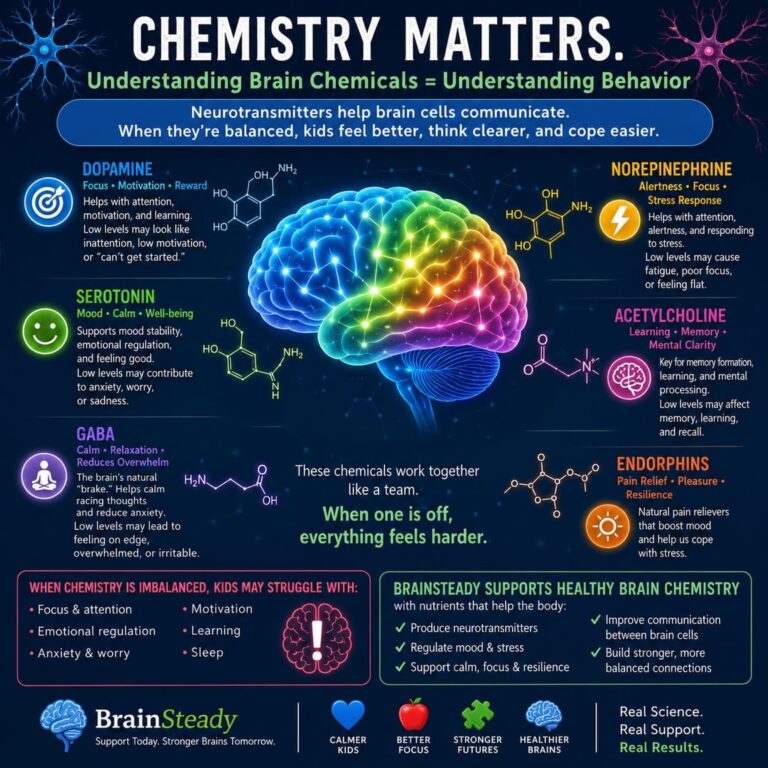
When the brain feels unsafe, it moves into survival mode. Logic and language go quiet, and What Can Make Overwhelm Harder?
Stress can affect both how we feel and how our bodies respond. Sleep, daily demands, relationships, and individual needs all deserve attention when someone is struggling.
A difficult moment alone cannot tell us what is happening with a person’s neurotransmitters. Start by noticing patterns: what happened beforehand, what helped, and what support might be missing.
How It Shows Up in Everyday Life
You might notice patterns that don’t match the situation in front of you. Common signs include:
- Huge reactions to small requests or changes in plans.
- Arguing, “talking back,” or shutting down when they feel cornered.
- School refusal, difficulty at drop-off, or after-school meltdowns.
- Difficulty settling for sleep even when they’re clearly tired.
- Parents feeling like they’re “walking on eggshells” to avoid the next blow-up.
Seeing behavior as a signal to understand can help us respond with curiosity rather than blame. The goal is to recognize what someone is finding difficult and work toward support that fits their needs.
Gentle Supports That Help Brains Settle
You don’t have to overhaul your whole life to support emotional regulation. Small, steady changes really do add up. Families in our community often start with:
- Predictable routines – simple “anchor points” like morning, after-school, and bedtime routines that help the brain feel safe.
- Regulation breaks – time to move, breathe, or gently reset before kids hit the red zone.
- Brain-supportive nutrition – protein, hydration, and nutrients that feed calm focus.
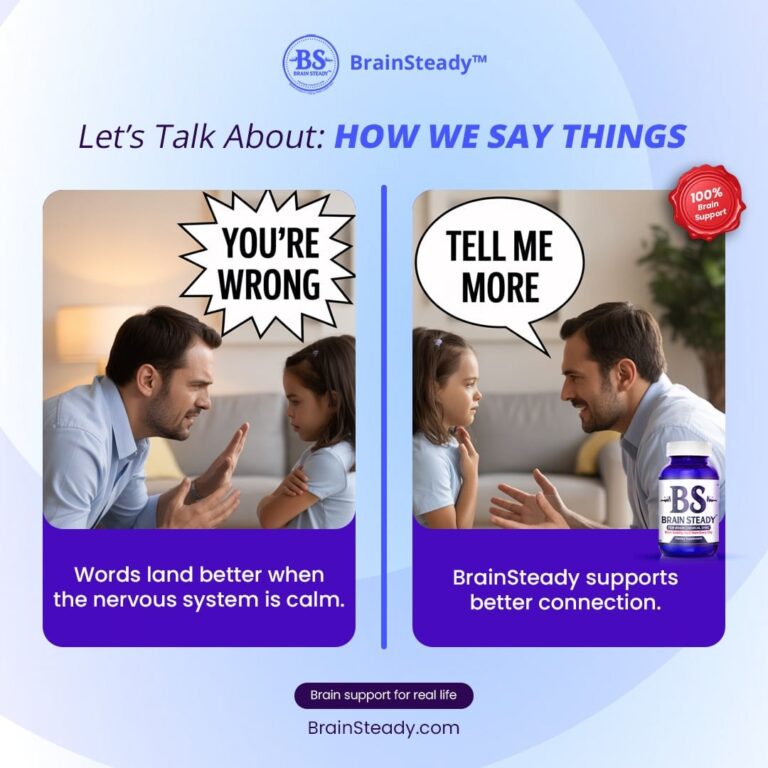
- Compassionate language – swapping “What’s wrong with you?” for “Your brain is having a hard time. Let’s figure out what it needs.”
Where BrainSteady™ Fits In
Where BrainSteady™ Fits In
Our brain formula was developed with brain support in mind. You can explore BrainSteady’s ingredients, serving information, and product details to learn more about the formula.
Every person’s needs are different. A qualified healthcare professional can help families evaluate supplements and other support options, particularly when someone takes medication.
Steady Days, One Step at a Time
If this sounded a little too familiar, you are not alone – and you’re not a “bad parent” for needing backup. Some brains simply need more support to do what they’re already working hard to do.
With small daily practices and the right BS (Better Support), it really is possible to see fewer blow-ups, softer landings after big feelings, and more room for connection in the middle.
When emotions run high, BrainSteady™ is here to quietly support the chemistry behind the scenes – so kids (and parents) can finally exhale.
You do not have to solve every difficult moment at once. Start with one manageable change, notice what helps, and build from there.
When emotional or behavioral difficulties persist or interfere with daily life, seek individualized professional guidance. Families deserve practical help and compassionate support.