
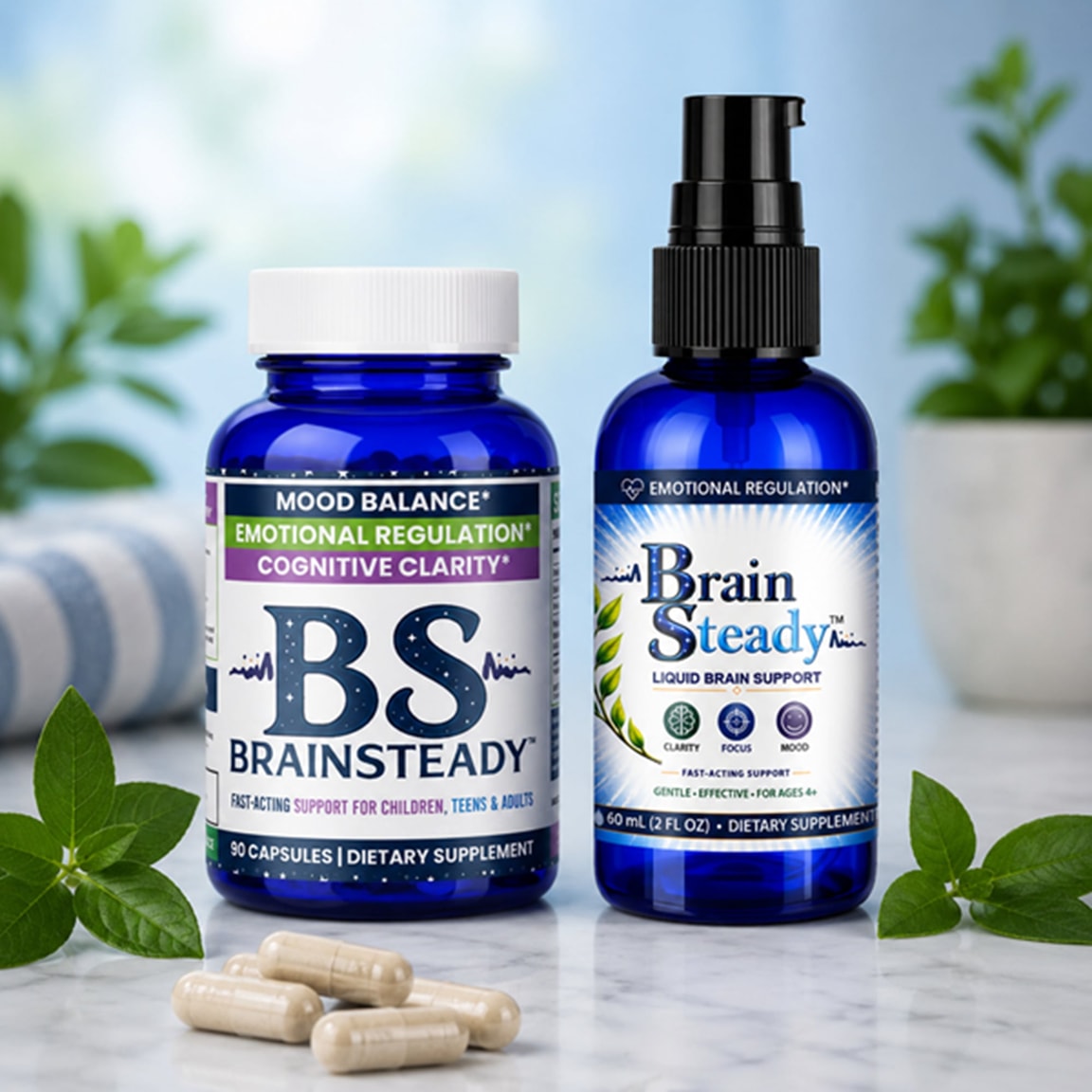
Capsule Vs Liquid Brain Supplement: Which Fits Your Family?
Picking a supplement is hard enough before you add a format decision. Capsule or liquid sounds like a small choice, yet it shapes whether the supplement actually gets taken, by an adult juggling meetings or a seven-year-old who clamps their mouth shut at the sight of a pill.
This guide compares the capsule vs liquid brain supplement question the way real households live it: by age, swallowing comfort, dosing, routines, travel and cost. It’s written for adults choosing for themselves and for parents choosing for someone else. A small note on language: when we say “BS,” we mean Brain Support, not the other kind.
Capsule and Liquid Brain Supplements: How the Formats Differ
Capsules and liquids are two delivery methods, not two grades of quality. Neither one is automatically the “serious” option. What matters is which one a person will take comfortably and consistently, at the right dose.
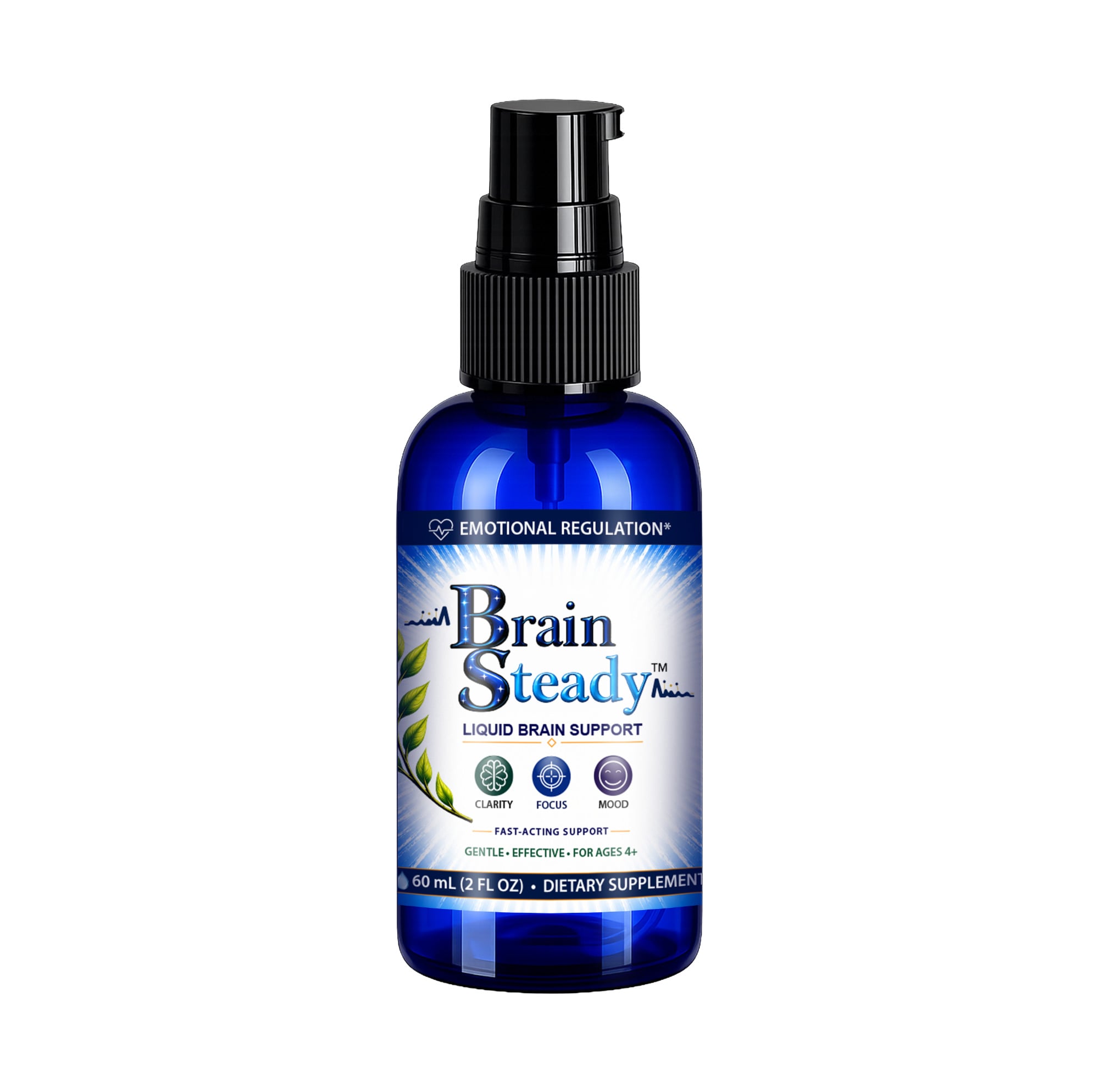
Here is how they compare on the everyday points that tend to decide it:
| Capsule | Liquid | |
|---|---|---|
| Taste | Largely hidden | Noticeable, though it can be stirred into a drink |
| Swallowing | Harder for many young children and some adults | Usually easier |
| Measuring | Pre-measured, one capsule at a time | Measured by volume with the supplied tool |
| Portability | Packs easily | Needs a sealed bottle and care in transit |
| Storage | Follow the label | Follow the label, which matters more once opened |
| Cost | Compare per serving on the label | Compare per serving on the label |
A capsule is the grab-and-go choice. You swallow it with water and you’re done, with no spoon, cup or syringe to wash afterward.
A liquid asks for a little more attention. You measure it, you store it as the label says, and you decide whether to take it straight or mix it into a drink.
Neither format is a shortcut around the basics, and neither suits everyone. If you dislike swallowing pills, a capsule will stay in the cabinet no matter how convenient it looks on paper.
Liquid vs. Capsule Absorption: What Research Shows and What It Doesn’t
Absorption is where format claims get slippery, so it helps to separate the plausible from the proven. You’ll often see liquids marketed as “faster” or “more absorbable,” and that deserves a closer look.
Are Liquid Supplements Better Than Capsules?
Not automatically. A liquid skips the step where a capsule shell has to break down, so it can be quicker in principle, but quicker is not the same as better. Head-to-head research comparing liquid and capsule forms of the same brain-support ingredients is limited, so format alone doesn’t settle the question.
Other factors tend to matter at least as much:
- The ingredient itself. Some compounds are absorbed readily and others are not, whatever form they arrive in.
- The dose. A well-absorbed amount of one ingredient may still be too small or too large to be useful.
- Your meal. Fat-soluble ingredients often depend more on being taken with a meal that contains some fat than on whether they come as a capsule or a liquid.
- Product design. How a finished product is made affects how its ingredients behave, which is why bioavailability is studied ingredient by ingredient rather than format by format.
So if you’re asking whether liquid supplements absorb better than capsules, the honest answer is that it depends on what’s inside and how you take it. A liquid is not a guaranteed upgrade.
Ingredient Research Is Not the Same as Product Evidence
Studies on a single ingredient tell you something about that ingredient, under that study’s conditions, at that study’s dose. They don’t tell you how a finished product with several ingredients performs. That distinction applies to every brand, including ours.
Evidence also varies a lot from one brain-support ingredient to the next. Some have a body of research behind them, others very little, and no single vitamin is the best pick for memory for everyone. Someone with a low intake of a nutrient may respond differently from someone whose diet already covers it.
If you want to see what’s in our brain formula, you can read the ingredient details on our Ingredients page. Treat it as a way to check what you’re taking, not as proof of an outcome.
Clinicians weighing this evidence for patients may find a clinician’s guide to supplements for focus and mood useful. For general background on individual nutrients, the NIH Office of Dietary Supplements publishes plain-language fact sheets.
Age and Swallowing Comfort: Kids, Teens, and Adults
Swallowing comfort changes across a lifetime, and it’s one of the first questions pharmacists ask families before suggesting an oral form. They commonly want to know whether the person can swallow it, whether they’ll tolerate the taste, and who will give each dose.
Our range covers children, teens and adults in both capsule and liquid forms, so the format question comes up at every life stage.
Supplement Format for Kids: Swallowing, Dose Size, and Routine
Many young children find capsules hard to swallow, which is why a liquid is often the easier starting point. A child who dreads the moment will resist it daily, and that makes the whole routine harder on everyone.
Liquids bring their own demand: exact measuring. Use the tool supplied with the product, not a kitchen spoon, because household spoons vary more than most people expect. Questions about dose should go to a pediatrician or pharmacist, particularly if your child takes other medicines.
A steady slot in the day helps too, such as after breakfast or before brushing teeth. If you’d like more detail on measuring and handling, see our guide on how to choose and use a liquid brain supplement for kids.
Liquid Supplement for Teens: Taste, Privacy, and Control
For teens, taste, privacy and a sense of control usually come first. Many want something quick that doesn’t announce itself, and they want a say in how it’s taken.
Because behavior is brain-based, refusal is rarely a character flaw. It’s a practical problem with practical fixes: let them choose the form, the time of day and where the bottle lives. A teen who feels in charge is more likely to follow through than one who is nagged.
Parents who want more context on focus and mood at this age can read a parent guide to brain supplements for teens.
Adults aren’t exempt from all this. Swallowing comfort can shift over the years, and if you notice persistent trouble with pills or liquids, that deserves a clinician’s review rather than a workaround.
Dosing Flexibility, Daily Routines, and Travel
Dose size is where the two formats differ most visibly. A capsule is one fixed unit. A liquid is a volume you control.
Dosing Flexibility of Liquid Supplements
A liquid can be adjusted in smaller steps than a whole capsule allows, which helps when a clinician or the label calls for a lower or gradually changing amount. That flexibility only works with the measuring tool that comes with the product, since a household teaspoon can hold noticeably more or less than the marked dose.
This is also a limit worth stating: flexibility is not permission to experiment. Any change should follow the label or a clinician’s advice, not a hunch that a little more might help.
Capsules offer less room to adjust, though they remove the chance of a measuring slip. For some people that predictability is the whole appeal.
Routines and travel
Routines matter more than most people admit. A daily habit tied to something you already do, like breakfast or morning coffee, often counts for more than the format on the label.
Travel tilts toward capsules. They go in a pocket or a pill case and need nothing else. Liquids need a tightly sealed bottle, storage the label specifies, and a plan for carry-on liquid rules if you’re flying. Check the airline and airport guidance before you pack.
Picture an adult with a crowded workweek. They keep capsules in a work bag because there’s nothing to measure between meetings, and save the liquid for slower weekend mornings at home. Nothing about that setup is clever. It just fits the day.
Taste, Mixing, and Cost per Serving
Capsules largely hide taste, so they suit anyone who is sensitive to flavor. Liquids can be stirred into a drink, which helps if taste is the sticking point.
Mixing has two cautions. First, an unfinished drink means a partial dose. Say a parent stirs a dose into a child’s juice and the child leaves half the cup: only part of the dose was taken. Offer a small serving of the drink and make sure it’s finished.
Second, check the label before mixing into anything hot, because heat may not suit every ingredient. If the label doesn’t say, ask a pharmacist.
Cost deserves the same practical eye. Bottle prices don’t compare well across formats, because a bottle and a capsule jar hold different numbers of servings. Divide by the label’s serving size instead, and you get a fair price per serving.
Then go one step further. A cheaper format that someone won’t take ends up costing more per dose actually taken, because the leftovers sit in the cupboard.
How to Choose a Supplement Form for Your Household
The right form is the one that fits a routine that feels doable. That lines up with something we say often: we do better when we feel better, and a routine that causes daily friction rarely helps anyone feel better.
Capsule Supplement for Adult Focus: Fitting It Into a Busy Day
If your days are packed, a capsule often wins on simplicity. It needs no measuring, travels easily and takes seconds with a glass of water. A capsule supplement for adult focus works best when it’s attached to a cue you never skip, like your first coffee or the start of your commute.
A liquid may suit you better if you prefer smaller dose steps, dislike swallowing pills or like stirring something into a morning drink. Plenty of adults use both, depending on whether they’re at home or on the move.
Be realistic, too. No format will make up for poor sleep, a heavy load or a difficult stretch, and a supplement is not a substitute for professional care. For a candid read on the adult side, see an honest look at supplements for adult emotional regulation.
A Quick Checklist for Parents and Caregivers
Bring these questions to your pediatrician or pharmacist before a child starts anything:
- Age: Is this format and dose appropriate for my child’s age?
- Swallowing comfort: Can they manage a capsule, or is a liquid the safer starting point?
- Taste tolerance: Will they accept the flavor, straight or mixed into a drink?
- Who gives each dose: Is it me, another caregiver, or the child themselves?
- Travel: What happens on school trips, sleepovers and holidays?
- Budget: What does a serving cost based on the label?
- Other medicines: Does anything my child already takes change the advice?
A supplement does not replace clinical care. If you have concerns about attention, mood or behavior, a clinician can look at the whole picture, and a supplement can only ever be one small part of it.
Our Capsule and Liquid Brain Supplement Options
BrainSteady offers brain support supplements in capsule and liquid forms for children, teens and adults. Our brain formula was developed with focus, mood balance and emotional regulation in mind. It supports everyday well-being. It is not intended to diagnose, treat, cure or prevent any condition.
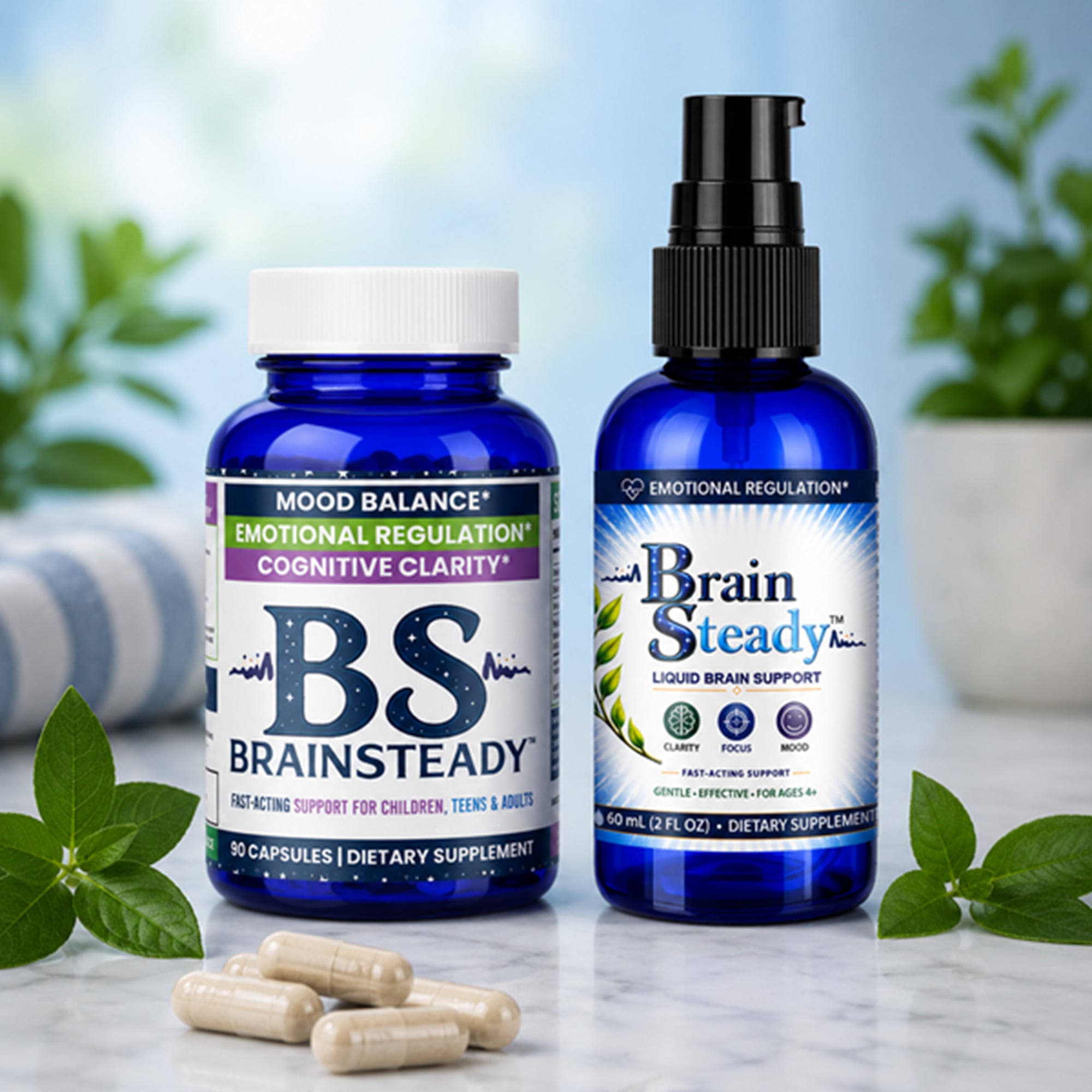
Once you’ve checked format and dose with a clinician or pharmacist, you can browse our capsule and liquid options on the Shop page and match the form to the person who’ll be taking it. There’s no rush, and the Ingredients page is there if you’d like to read the details first.
Frequently asked questions
Do any brain supplements actually work?
It depends on the ingredient, the dose and the person. Some individual ingredients have more research behind them than others, and that research doesn’t automatically carry over to a finished product. A pediatrician, pharmacist or other clinician can help you weigh what’s reasonable for you or your child.

Do liquid supplements work better than pills?
Not automatically. A liquid skips the capsule-shell breakdown step, so it can be quicker in principle, but evidence comparing the two forms for brain-support ingredients is limited. The ingredient, the dose and whether you take it with a meal matter at least as much as the format.
What are the benefits of capsules?
Capsules largely hide taste, come pre-measured and pack easily for work or travel. The trade-offs are that many young children and some adults find them hard to swallow, and the dose is less adjustable than a measured liquid.
What vitamin is best for brain memory?
No single vitamin is the best choice for memory for everyone. Evidence varies from one ingredient to the next, and what helps can depend on diet, age and what a person already gets. A clinician or pharmacist can talk through your situation, especially if you take other medicines.






One Comment