
Supplements That Interact With SSRI Medication: What to Ask
If you take an SSRI and you’re curious about a supplement, stopping to check first is the right instinct. It’s also a common worry, and most of what’s online is either alarmist or written for clinicians.
The honest answer to whether you can take supplements with antidepressants is this: sometimes. It depends on the ingredient, the dose, and every other medicine you take. Some pairings are low concern. A few need a prescriber’s direction before you start.
This guide covers which supplements raise flags, how to read a label, what serotonin syndrome looks like, and what to say at the pharmacy counter. It is general education, not medical advice, and it can’t tell you what is safe for your body.
Why Supplements and SSRIs Can Overlap
SSRI stands for selective serotonin reuptake inhibitor. Serotonin is a chemical messenger that nerve cells use to signal each other, and cells normally take some of it back up after it’s released. An SSRI slows that reuptake, so more serotonin stays active between nerve cells.
Some supplements work on the same pathway, either by supplying raw material for serotonin or by changing how the body handles it. Combine the two and the effect can be stronger than either one alone, which is why the overlap matters even when each product is fine on its own.
Serotonin isn’t the only concern. SSRIs also affect platelets, the blood cells that help clots form, so some supplements raise a bleeding question instead of, or as well as, a serotonin one.
A quick note on shorthand: when we say “BS” here, we mean Brain Support, not the other kind. This topic calls for the useful kind, which is clear information and a pharmacist who can see your whole medication list.
Which Supplements Interact With SSRI Medication
Not every flagged supplement is flagged for the same reason. Here is the short version before the detail.

| Supplement | Main concern |
|---|---|
| St. John’s wort | Serotonin activity; also changes how other medicines are broken down |
| 5-HTP | Serotonin activity |
| Tryptophan, SAMe | Serotonin activity |
| Melatonin (with fluvoxamine) | Higher melatonin levels |
| High-dose fish oil, garlic, ginkgo, curcumin | Bleeding |
| Regular NSAIDs such as ibuprofen | Bleeding |
If you want the ingredient-level research behind serotonin-related products, we’ve pulled together what the evidence says about dopamine and serotonin support supplements.
St. John’s Wort and 5-HTP: The Serotonin Flags
St. John’s wort is one of the most frequently flagged supplements alongside an SSRI. It acts on serotonin, and it also speeds the breakdown of many other medicines, which can change how well they work. The NCCIH overview of St. John’s wort lists these interactions in plain language.
5-HTP is the other big one. Your body converts it into serotonin, so taking it with an SSRI adds serotonin activity on top of what the medication already does. Neither product should be combined with an SSRI unless your prescriber directs it.
Three more deserve a mention:
- Tryptophan is an amino acid your body also uses to make serotonin, so it belongs in the same conversation as 5-HTP.
- SAMe is sold for mood and joint support and can act on serotonin too.
- Melatonin is usually seen as gentle, but fluvoxamine, one of the SSRIs, can raise melatonin levels in the body. If you take fluvoxamine, ask before you add it.
Reviewing all of this against one medication list is exactly what a pharmacist is trained to do, and it takes a few minutes.
Bleeding Risk: Fish Oil, Garlic, Ginkgo, and NSAIDs
SSRIs can make it slightly harder for blood to clot. Several supplements do something similar, so the pairing is worth a question, not a panic.
The usual names are high-dose fish oil, garlic supplements, ginkgo, and curcumin. Regular NSAID pain relievers such as ibuprofen belong on the list too, and people often forget to mention them because they’re sold over the counter and feel ordinary.
How much any of this matters depends on the dose, how long you take it, and your own history, including any other blood-thinning medicine or an upcoming procedure. That’s why these pairings are reasons to ask your prescriber or pharmacist, not reasons to guess.
Across SSRI prescribing information and standard drug-interaction references, the guidance is consistent. Serotonin-active products and bleeding-risk supplements get reviewed with a prescriber or pharmacist before use, not added on a hunch.
Mood Supplement Safety: Reading Labels for Serotonergic Ingredients
Words like “mood,” “calm,” and “natural” tell you what a product is aiming for. They don’t tell you whether it suits someone taking an SSRI, because “natural” describes where an ingredient comes from, not how it behaves next to a medication.
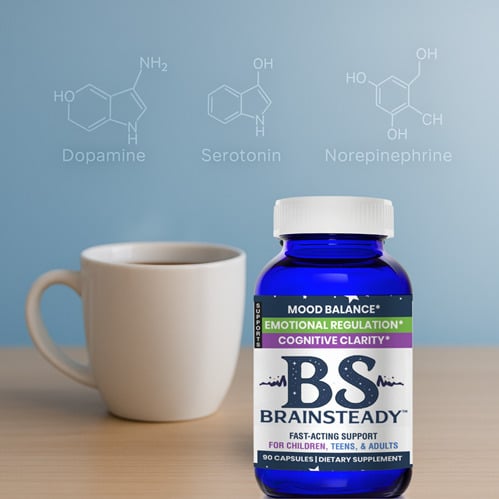
A typical case: an adult starts a “mood” blend after a hard month and mentions it to no one. Weeks later, they read the label properly and spot an ingredient that acts on serotonin. Nothing dramatic happened, but the conversation that should have come first never did.
Front-of-Pack Claims Versus the Supplement Facts Panel
The reliable information sits in two places: the Supplement Facts panel on the back and a pharmacist’s review of it. The front of the pack is marketing.
When you turn a bottle over, scan for these:
- 5-HTP, tryptophan or L-tryptophan
- St. John’s wort, sometimes listed as Hypericum perforatum
- SAMe, or S-adenosylmethionine
- Melatonin
- Fish oil, garlic, ginkgo, or curcumin and turmeric extracts
- “Proprietary blend” lines that hide the amount of each ingredient
That last one matters most for your purposes. If the label doesn’t show amounts, nobody can judge the dose, and a pharmacist will tell you the same. A general framework helps before any purchase, so here is a practical checklist for choosing a brain supplement.
Our brain formula was developed with focus, mood balance, and emotional regulation in mind. We don’t claim it treats or prevents anything, and we can’t tell you whether it suits someone taking an SSRI, so that is a question for your prescriber or pharmacist. If you’d like to see exactly what’s in it, our ingredients page lists everything.
One caution applies to any product. Research on a single ingredient, such as St. John’s wort, doesn’t automatically describe a finished blend, so keep ingredient studies and finished-product evidence separate in your mind.
Serotonin Syndrome: Recognizing Warning Signs
Serotonin syndrome happens when too much serotonin activity builds up in the body. It is uncommon but serious, so the goal is recognition and quick action, not fear. Most people who combine an SSRI with a supplement never experience it.
Symptoms That Call for Urgent Care
Warning signs usually appear within hours of starting or increasing a serotonin-active product. They include:
- agitation, restlessness, or confusion
- a fast heartbeat
- heavy sweating
- shivering
- tremor or muscle twitching
- diarrhea
- fever
MedlinePlus describes the same cluster. Because several of these overlap with anxiety, a stomach bug, or a bad night’s sleep, the pattern matters more than any single symptom.
Side Effect or Emergency? Who to Call and When
A simple way to sort it:
- One mild, stable effect, such as a little queasiness that isn’t getting worse: contact your prescriber or pharmacist promptly and describe what you started and when.
- Several symptoms together, or symptoms worsening quickly: treat it as urgent and go to urgent care or call your local emergency number.
- Not sure which category you’re in: treat it as urgent. Being wrong in that direction costs you an afternoon.
Whatever happens, don’t stop or change your SSRI on your own. Medical staff can make that decision with the full picture in front of them, and they’ll want to know about every supplement you’ve taken.
Questions to Ask Your Pharmacist About Supplements
A pharmacist sees your whole medication list and knows how products interact, and you don’t need an appointment. Asking at the counter is quick, free of judgment, and the most practical safety step you have.
If you work in a clinic or pharmacy yourself, a clinician’s guide to supplements for focus and mood gives a useful overview to share with patients.
A Pharmacist Conversation Script for the Counter
Bring the product itself, or a photo of the Supplement Facts panel, and then say something like this:
- Name your medication. “I take sertraline, 50 mg, every morning.” Use your own prescription and dose.
- Hand over the label. “I’m thinking of starting this. Can you look at the ingredients?”
- Ask about serotonin. “Does anything in here act on serotonin?”
- Ask about bleeding. “Does anything affect bleeding, either alone or with the ibuprofen I sometimes take?”
- Ask about timing. “Does it matter when I take it, or should I wait until I’ve talked to my prescriber?”
- Ask what to watch for. “Which symptoms should I report, and who should I call?”
Mention every other medicine too, including over-the-counter ones and other supplements. Pharmacists can only check what they hear about.
Common Questions About Multivitamins, Vitamin D, and Food
A standard multivitamin or vitamin D is usually lower concern than a mood or botanical blend. Even so, mention them, because doses vary and some multivitamins quietly include herbal add-ins. Those add-ins deserve the same label check as anything else.
Food questions are harder to answer in general. People often ask which fruit to avoid with a particular SSRI, and the answer depends on the specific medication, so ask your pharmacist to confirm it for yours instead of relying on a list that may not apply to you.
Supplement Safety Starts With Not Adjusting Your Medication
Here is the rule, kindly and plainly: never stop, skip, double, or taper an SSRI to make room for a supplement. And never use a supplement in place of a prescribed medication.
It’s tempting to think spacing the two apart by a few hours solves the problem. It doesn’t replace a prescriber’s review, because some interactions work through how the body processes medicine over days, not through what’s in your stomach at the same time.
Stopping an SSRI suddenly can also bring discontinuation symptoms of its own, such as dizziness, irritability, and flu-like feelings, on top of whatever the medication was helping with. Changes belong with the person who prescribed it, and they can plan one safely with you.
This approach won’t suit anyone hoping to swap a prescription for a supplement, and we wouldn’t want you to. If you’re managing focus and mood alongside prescribed care, brain supplements for adults: a focus and calm guide is a good place to start thinking about questions to bring to your provider.
Keep a Running Log of Everything You Take
Think of the log as a favor to the people who help you, not as homework. When a prescriber, pharmacist, or surgeon can see everything in one place, they can spot an overlap you’d never notice yourself.
Picture a caregiver who keeps a dated list of everything a teen takes, including a “calm” gummy a friend suggested. At the next visit the prescriber reads the whole list in one go, and the gummy’s ingredients get checked along with everything else. If that’s your situation, whether a supplement can support child emotional regulation covers questions worth raising first.
What to Write Down for Each Product
For every prescription, over-the-counter medicine, and supplement, record:
- the exact product name
- the ingredient panel, or a photo of it
- the dose and how often you take it
- the timing, such as with breakfast or at bedtime
- the start date
- the reason you take it
Add a line for any change in sleep, mood, digestion, or bruising, with the date. Those small notes often point to the answer.
Bring the log to every appointment, including dentist and urgent-care visits, and update it whenever something starts or stops. Ask your surgeon when to pause any supplement before a procedure, since some need to stop well ahead of time.
Before you start anything new, take your log and the counter script above to your pharmacist or prescriber and walk through them together.